A single apple tree can look magnificent in May — smothered in blossom, loud with bees — and then give you almost nothing in September. It is rarely bad luck and it is not usually disease. More often than not, the tree simply had no other variety to swap pollen with. Some fruit trees set a decent crop entirely on their own. Others will not produce a single fruit without a compatible partner flowering at the same time. Knowing which camp your tree falls into before you plant it saves years of frustration.
Self-fertile and self-sterile: what the labels mean
A self-fertile tree can set fruit using its own pollen. Pollen moves from the anthers of a flower to the stigma of the same flower, or to another flower on the same tree, and fertilisation follows. Most peaches, nectarines, apricots, quinces and figs work this way, as do some plums and a handful of apples and pears.
A self-sterile tree carries a built-in block. Its own pollen will not grow a tube down the style to reach the ovule, so the flower sits there, fades and drops without ever swelling into fruit. The block is often shared by closely related varieties too, which is why two apple trees are not automatically a solution — they need to be different varieties that flower at the same time.
Between the two sits the awkward middle ground: partially self-fertile. These trees will crop alone, but lightly. Give them a partner and the difference is usually obvious — bigger crops, better-shaped fruit and fewer gaps along the branch.
Flowering groups: the timetable that decides everything
Pollination only happens if two trees are in flower at the same moment. Apples and pears are therefore sorted into flowering groups, running from the earliest to the latest varieties. Apple groups are usually numbered 1 to 6; pears are often lettered or numbered over a smaller range.
The rule of thumb is simple: a variety will pollinate others in its own group and the groups immediately either side of it. So a group 3 apple is a good partner for groups 2, 3 and 4. Put a group 1 next to a group 5 and you may as well have planted them in different counties.
Group numbers are a guide, not a promise. A cold spring stretches the season out and a warm one compresses it, so trees that normally miss each other can occasionally overlap. Do not rely on that happening.
Which fruit trees need a partner
Here is the practical picture for the fruits most commonly grown in British gardens.
- Apples: mostly self-sterile. Most varieties need a different apple nearby. A few, such as ‘James Grieve’ and ‘Greensleeves’, are partially self-fertile and will give you some fruit alone, but still crop better with company.
- Pears: mostly self-sterile. ‘Conference’ is partially self-fertile and is often sold as a safe choice for a single tree, though it too performs better with a partner such as ‘Concorde’.
- Plums, gages and damsons: mixed. ‘Victoria’, ‘Czar’, ‘Marjorie’s Seedling’ and ‘Oullins Gage’ are self-fertile or near enough. Most other dessert plums and gages crop far better with a partner. All of them cross with one another, including damsons.
- Sweet cherries: almost always self-sterile. ‘Stella’, ‘Sunburst’, ‘Lapins’ and ‘Sweetheart’ are the well-known exceptions. Others need another sweet cherry in a compatible flowering group.
- Acid cherries: ‘Morello’ and its relatives are self-fertile and crop reliably on a north wall with no partner at all.
- Peaches, nectarines and apricots: self-fertile as a rule. Apricots often carry heavier crops when a second variety is nearby, particularly in a cool season.
- Quinces and figs: no partner required. Figs in the UK ripen fruit without any pollination at all.
- Cobnuts and filberts: not strictly fruit, but they belong in the same plan — plant at least two varieties so the catkins overlap.
The same-species rule
Apples pollinate apples. Pears pollinate pears. A pear will not pollinate an apple, and a plum will not pollinate a sweet cherry. Crab apples are the useful exception: they flower over a long period, produce masses of pollen and will pollinate any apple variety whose blossom overlaps.
Triploids: the trees that cannot return the favour
Some varieties are triploid. They carry an extra set of chromosomes, which makes their pollen sterile. They will set fruit happily if something else pollinates them, but they cannot pollinate anything in return.
Bramley’s Seedling is the famous example. Several older apples, including ‘Ribston Pippin’ and ‘Ashmead’s Kernel’, behave the same way. If a triploid is your main tree, you need two other varieties — one to pollinate the triploid, and one to pollinate that partner — unless one of them is self-fertile.
Making the partnership actually work
Choosing a compatible variety is the first step; siting and aftercare decide whether the pollen ever reaches its destination.
- Distance: keep partners within roughly 15 to 20 metres. Bees will travel further, but pollen transfer between distant trees becomes patchy. If a neighbour’s tree is close by and in a matching group, that may do the job for you.
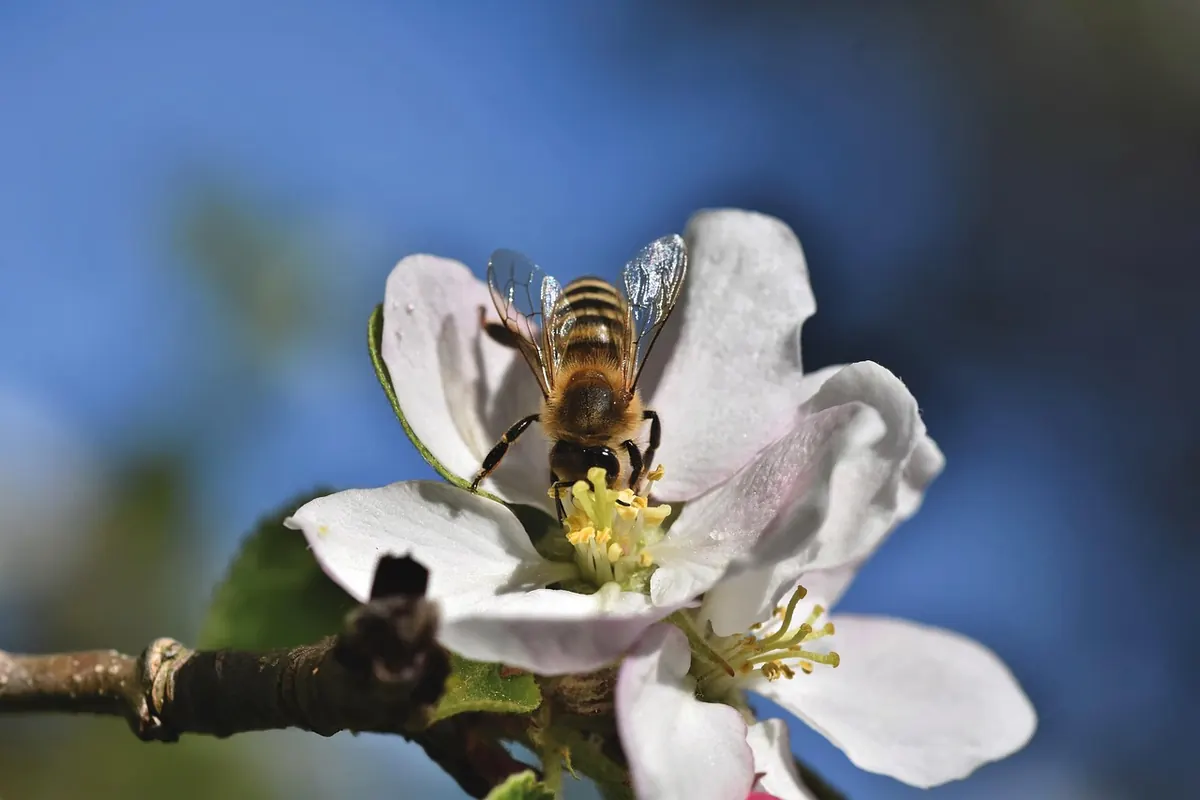
- Insects: apples, pears, plums and cherries all depend on insects, mostly bees. Mason bees and bumblebees fly in cooler, damper weather than honeybees, so a garden that welcomes them is a garden that sets fruit. Never spray insecticides while blossom is open.
- Weather: a cold, wet, windy fortnight during flowering keeps pollinators grounded. This is when even self-fertile trees crop poorly, and why a second variety is cheap insurance.
- Tree condition: very young trees, over-pruned trees and trees in deep shade all set less fruit. Feed and mulch, but do not push soft growth with heavy nitrogen.
When space is tight
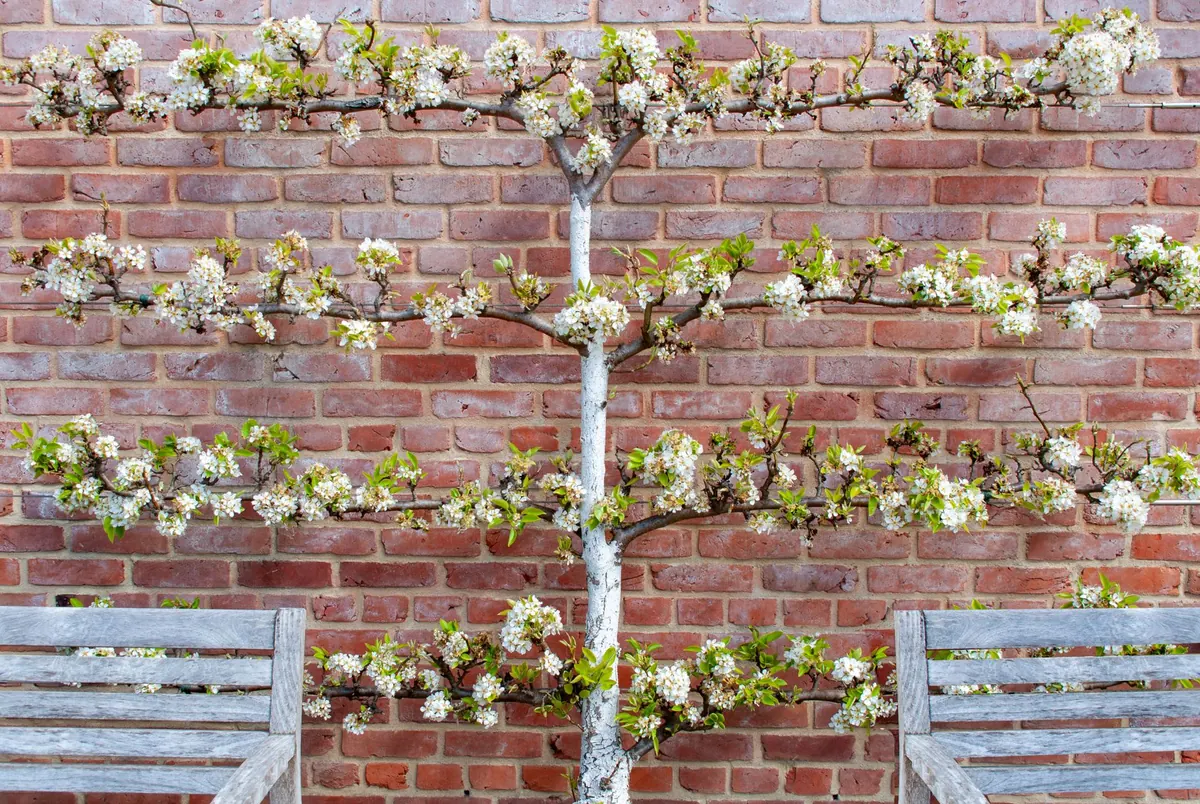
You do not need an orchard. A family tree — two or three varieties grafted onto one trunk — carries its own pollination partners. Two cordons trained against a fence will pollinate each other, as will two stepovers either side of a path, provided the flowering groups match and neither is a triploid.
Planning before you buy
- Decide which fruit you actually want to eat, then check whether your chosen variety is self-fertile, partially self-fertile or self-sterile.
- Look up its flowering group and rootstock, since the rootstock sets the eventual size.
- Pick a partner one group either side — unless your first tree is a triploid, in which case plan for two.
- Check the partner’s group too. It is easy to buy a pair that never meet in flower.
- Keep the labels or note the details somewhere sensible. Five years later, when the crop is thin, that note is the fastest way to work out why.
Do that groundwork once and the reward is a garden where blossom means fruit, year after year, rather than another handful of small, hard apples in October.
Photo: Ralphs_Fotos / Pixabay