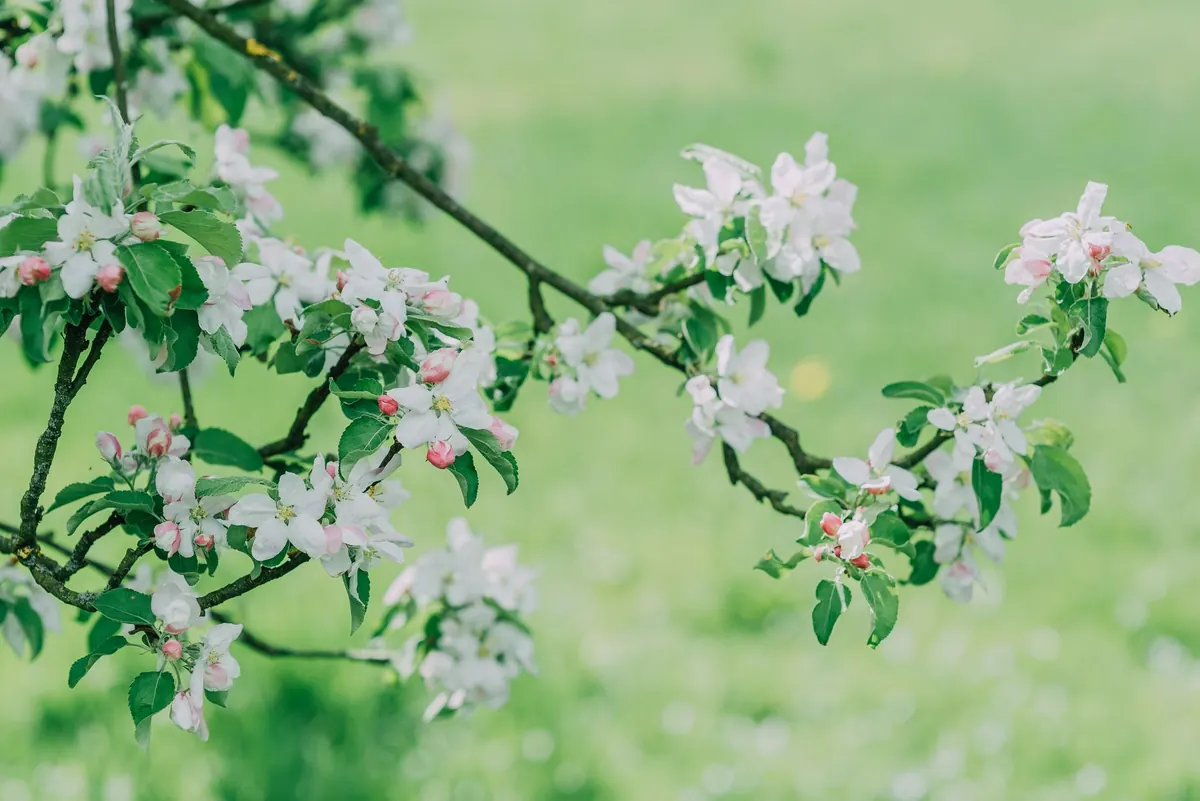
A fruit tree keeps a receipt. Skip the watering in a dry July and the apples come in small and floury. Let the branches crowd for three summers and the crop moves to the top of the tree, out of reach. Nothing in an orchard is a disaster the first year, but everything accumulates.
What follows is a working calendar for a British garden orchard — perhaps three or four apples, a pear, a plum and a cherry, or a row of cordons along a fence. Treat it as a prompt rather than a rulebook. A garden in Cornwall runs a fortnight ahead of one in Aberdeenshire, and a sheltered town plot will flower earlier than an exposed hillside.
January and February: The Dormant Months
This is pruning season for apples and pears, but only when the wood is dry and the temperature is above freezing. Work on the three Ds first — dead, diseased, damaged — then open up the centre of the tree so light and air reach the fruit.
Leave plums and cherries alone. Wounds made in cold, wet weather invite silver leaf, a fungal disease that can kill a mature tree; their pruning window is summer.
Bare-root trees are best planted between late November and early March, provided the ground is neither frozen nor waterlogged. Soak the roots, dig wide rather than deep, and plant to the same depth the tree grew before. Firm the soil, stake if needed, and water in well even in winter.
Winter work, in order of importance:
- Finish pruning apples, pears, medlars and quinces.
- Plant or move bare-root stock while it is dormant.
- Apply a winter wash to apples and pears to knock back overwintering eggs and spores.
- Sharpen and oil tools, and check ties, stakes and tree guards.
- Order rootstocks or new trees for spring.
Hold off feeding until spring — nutrients applied now leach away before the roots can use them. If you have heavy clay soil, this is a good moment to fork in a little compost around the drip line, but keep off it when it is sodden.
March and April: Waking Up
As buds break, feed. A balanced fertiliser or a dressing of sulphate of potash suits most fruit, scattered over the root zone and lightly forked in. Go steady on nitrogen: too much pushes soft leafy growth at the expense of fruit and encourages aphids.
Mulch straight after, a 5cm layer of well-rotted manure or compost, kept a hand's width clear of the trunk so the bark stays dry.
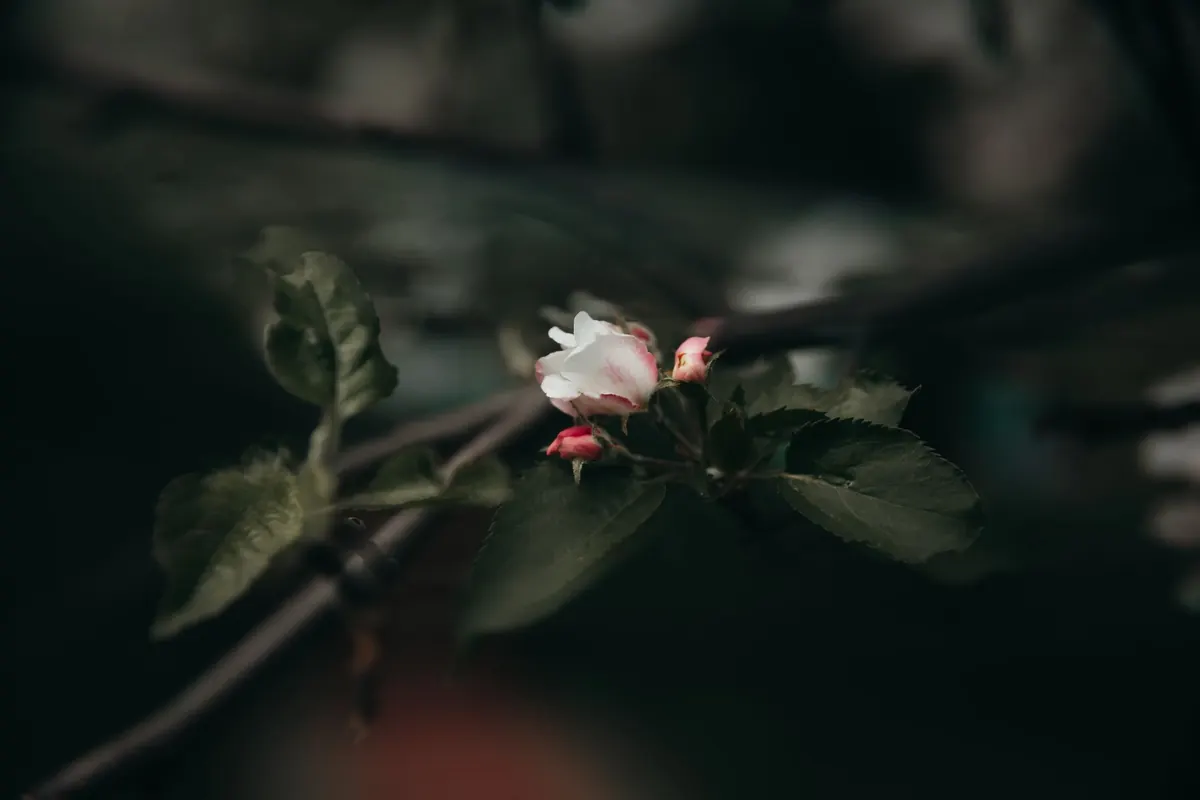
Then watch the forecast. Blossom is vulnerable to late frost, and one cold night can take the year's crop. Fleece helps, as does moving pots to a sheltered wall. Never water in the evening if frost is expected.
Pollination deserves a thought too. Most apples need a compatible partner flowering at roughly the same time; if a neighbour grows a crab apple, you may already be covered. Pears are fussier, and some, like 'Conference', need a different variety nearby. Plums and cherries often crop better with a partner as well.
What to check
- Aphids clustering on soft new tips — wash them off before the population explodes and curls the leaves.
- Caterpillars on young leaves, especially on cherries; pick them off by hand.
- Blossom wilt on pears and apples — brown, shrivelled flowers that stay on the branch. Remove and bin them, don't compost.
- Ties and stakes after spring gales; a rubbing tie can ring-bark a young trunk.
- Water newly planted trees if the spring is dry, even before they leaf out.
May and June: Fruit Set and Thinning
By late May the fruit is set and the tree's job shifts from flowering to swelling. This is the moment to thin apples and pears. Leave one or two fruits per cluster, spacing them roughly 10–15cm apart for apples and 12–15cm for pears. It feels brutal, but the remaining fruit will be larger, healthier and less likely to break branches.
Plums and cherries are usually thinned less, but if a plum is overloaded, remove some fruit to prevent broken limbs. Never thin stone fruits in wet weather; wait for a dry spell.
Watering becomes serious now. A young tree needs about 10–15 litres a week in dry weather, poured slowly at the drip line rather than against the trunk. A mature tree can manage with less, but a long dry spell during fruit swell will cost you size and flavour. Mulch helps hold moisture, but it is not a substitute for watering.
Pests to watch:
- Codling moth — hang pheromone traps in late May to catch the males before they mate.
- Plum moth — similar traps, or pick up dropped fruit promptly.
- Wasps — not usually a problem until late summer, but watch for nests near the orchard.
- Birds — net cherries and soft fruit as they colour, or use a fruit cage.
July and August: Water, Pests and Summer Pruning
July is the make-or-break month for flavour. A dry spell now leaves apples small and floury, and can cause premature drop. Keep watering, especially on dwarf rootstocks like M9 or M27, which have shallow roots. A soak once a week is far better than a daily sprinkle.
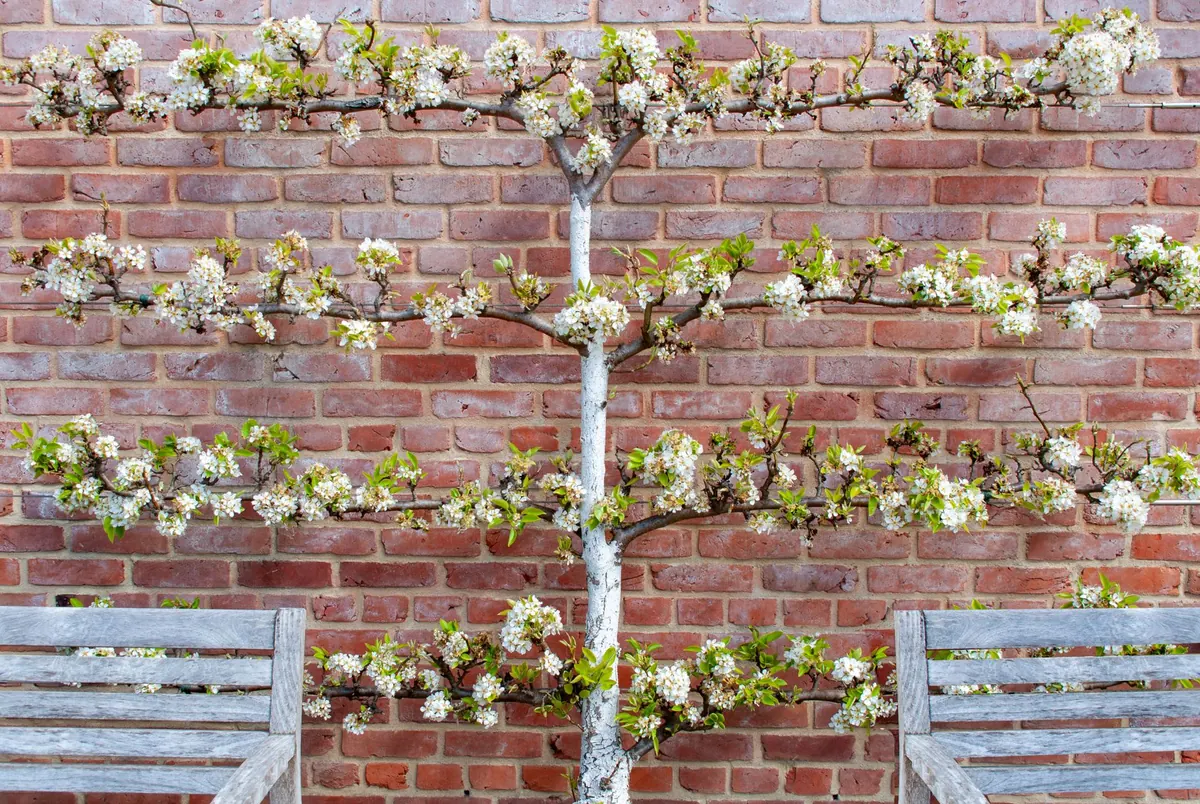
Summer pruning is for trained forms — cordons, espaliers, fans — and for restricting the size of vigorous trees. Cut back the current season's side shoots to about three or four leaves from the base. This lets light into the fruit and encourages next year's fruiting spurs. Do it in late July or August, not earlier, or the tree may push new growth instead of settling down.
Cherries and plums can be pruned now, in dry weather, to avoid silver leaf. Keep the cuts clean and paint nothing on them; modern advice is to leave wounds unpainted.
Harvest begins. Early apples like 'Discovery' may be ready in August. Pick by cupping the fruit and lifting it gently — if it comes away with its stalk, it is ripe. Windfalls should be cleared daily to reduce pests and disease.
September and October: Harvest and Clean-Up
This is the main harvest for apples, pears, plums and cherries. Pears are best picked before they are fully ripe and ripened indoors; they go mealy if left on the tree too long. Apples for storage — 'Bramley', 'Egremont Russet', 'Ashmead's Kernel' — should be picked when the background colour turns from green to yellow-green and the stalk parts easily.
Store fruit in a cool, dark, frost-free place. Single layers on slatted shelves, or wrapped in newspaper, reduce the spread of rot. Check regularly and remove any bad fruit immediately.
After harvest, clean up. Rake up fallen leaves, especially under apples and pears, to break the life cycle of scab and codling moth. Remove rotten fruit from the ground and from the tree. Compost only if your heap gets hot; otherwise bin it.
Autumn is also a good time to apply a mulch of well-rotted manure or compost around established trees, and to plant new bare-root trees from late November onward. Order early for the best choice of varieties.
November and December: Putting the Orchard to Bed
As leaves fall, the orchard slows down. Finish any planting, check tree guards against rabbits and deer, and clear debris from around the trunks. This is the time to prune apples and pears again, but only if the wood is dry and the temperature is above freezing.
Winter washing can be done on a still, mild day. It is not a cure-all, but it helps with aphids, mites and some fungal spores. Avoid it if frost is forecast; the wash can damage tender bark.
Look after the soil, too. Avoid walking on wet ground more than necessary, as compaction is the quiet enemy of fruit trees. If you have a heavy soil, consider a permanent grass strip between rows and a mulched circle around each trunk.
The Pollination Puzzle
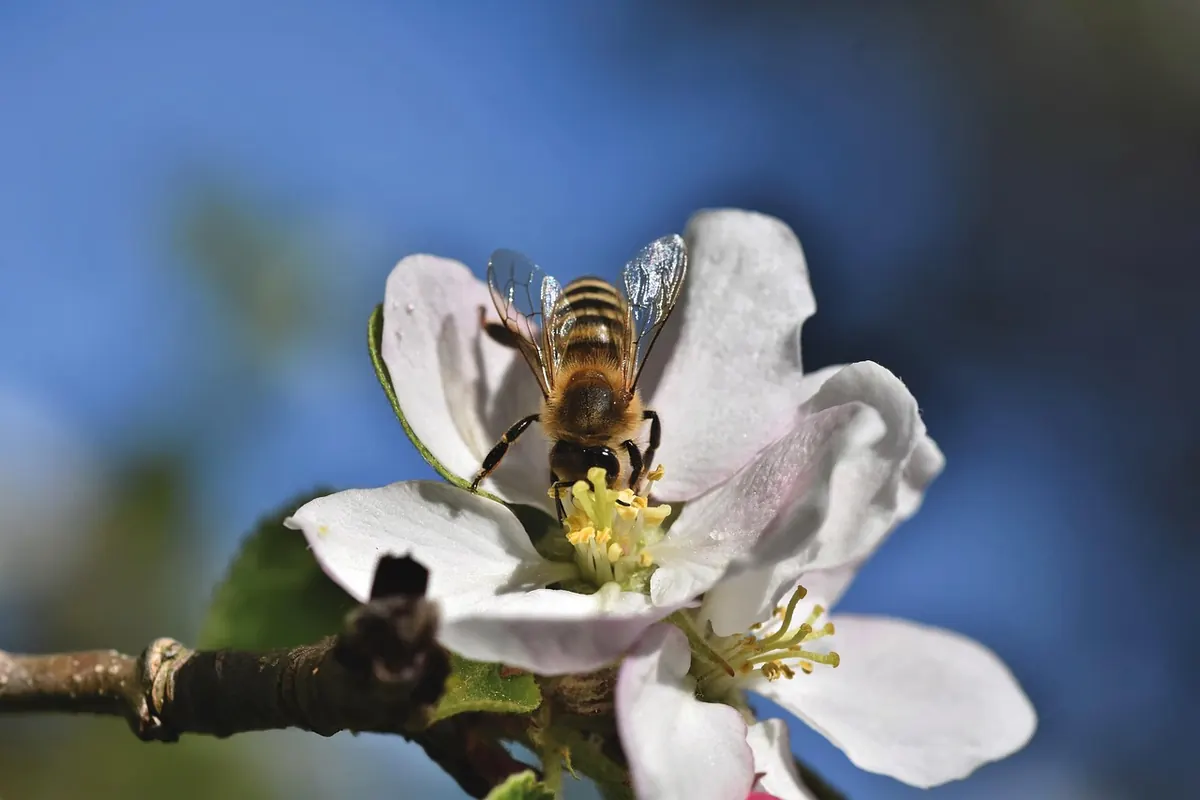
Pollination is the most common reason for a poor crop in a small orchard. Most apples are not self-fertile, so they need a partner that flowers at the same time. It is not enough to plant any two apple trees; an early-flowering 'Beauty of Bath' will not pollinate a late-flowering 'Bramley'. Check flowering groups before you buy. A crab apple like 'Golden Hornet' is an excellent universal pollinator and looks good in autumn.
Weather matters as much as variety. Bees do not fly in cold, wet or windy conditions, so a wet May can ruin pollination even when the varieties are perfectly matched. If you are worried, you can hand-pollinate a small tree with a soft brush, moving pollen from one flower to another. It is fiddly, but it works.
Tools, Records and the Long View
Good tools make orchard work easier and safer. A sharp pair of bypass secateurs, a pruning saw, loppers, a sturdy ladder, and a wire basket for collecting windfalls will cover most jobs. Clean blades between trees with methylated spirits to avoid spreading disease.
Keep a simple notebook. Record when each variety flowers, when the fruit is picked, and what pests or diseases appear. After two or three years, your own calendar becomes more useful than any general guide. You will know that your 'Victoria' plum ripens in the second week of August, or that codling moth always appears after a warm May.
An orchard is not a museum. It is a conversation between you, the weather and the tree. The best growers listen more than they spray.
Finally, accept that some years will be better than others. A late frost, a wet summer or a plague of wasps can take a crop. The tree is still building roots, wood and resilience. Do the small things well each month, and over five or ten years the orchard will reward you with more fruit than you can eat, share or store.
Photo: Lara / Pexels