Ordering a fruit tree is the easy part. What happens in the hour or two after it arrives often decides whether you end up with a cropping tree or a sad stick that never quite recovers. Most young trees that fail in their first year are not killed by disease or bad luck. They are killed by something that happened on planting day.
The five mistakes below account for a great many of those losses, and none of them is expensive to put right. A spade, a stake, a bag of mulch and a little patience will do it.
1. Planting too deep
This one catches out more growers than anything else, and it is easy to see why. A tree that has spent two years in a pot often has its roots sitting well above the base of the trunk, so if you simply tip it into a hole, you bury a section of trunk that has no business being underground.
The marker to watch is the graft union — the knobbly, slightly swollen joint low on the trunk where the fruiting variety was joined to the rootstock. It needs to sit clear of the soil, ideally 5–10cm above the final soil level once everything has settled. Bury it and the join can rot, growth stays weak, and in the worst cases the variety you paid for is gradually taken over by suckers from the rootstock below.
Before you backfill, lay a cane across the hole and check the level. Look for the nursery soil line on the trunk, usually visible as a slightly darker or greyer band of bark. Plant to that line and no deeper, then water properly so the soil settles, and check again the next morning. If the tree has sunk, lift it rather than leaving it buried.
A month after planting, scrape back a little soil at the base. The graft union should still be sitting proud of the ground. If it is not, raise the tree now — it is far easier in autumn than in June.
2. Ignoring drainage and filling the hole with riches
Fruit trees hate wet feet. If you dig a hole on heavy clay, fill it with compost and drop a tree in, you have effectively built a sump: water drains in from the surrounding soil, hits the looser, organic-rich fill and stops. The roots below sit in a puddle for weeks, go black and rot away.
Fork over the base and the sides of the hole to break up any pan, but backfill with the soil you dug out, improved with a modest amount of garden compost. On clay, plant slightly proud so the crown of roots sits above the surrounding ground and the roots can spread outwards into the soil around the hole.
If you are unsure about drainage, test it. Fill the hole with water and see how long it takes to disappear. If it is still there after a few hours, either move to a better spot or plant on a mound. Do not add fertiliser to the planting hole — it can burn tender new roots. Wait until the tree is growing away in spring, then feed lightly.
3. Letting grass and weeds move in
A young tree has a small root system and no reserves to spare. Competition in the first three years is the difference between a tree that puts on 60cm of growth and one that barely moves at all. Grass is the worst offender: shallow-rooted, greedy and relentless.
Keep a clear circle at least a metre across around the trunk — wider for vigorous trees — free of grass and weeds for the first three or four summers. Mulch it with well-rotted manure, compost or bark chippings to a depth of 5–8cm, but pull the mulch back a few centimetres from the trunk so it does not hold damp against the bark. A mulch mat or a weighted square of cardboard works too if you are short of material.
4. Wrong spacing and the wrong spot
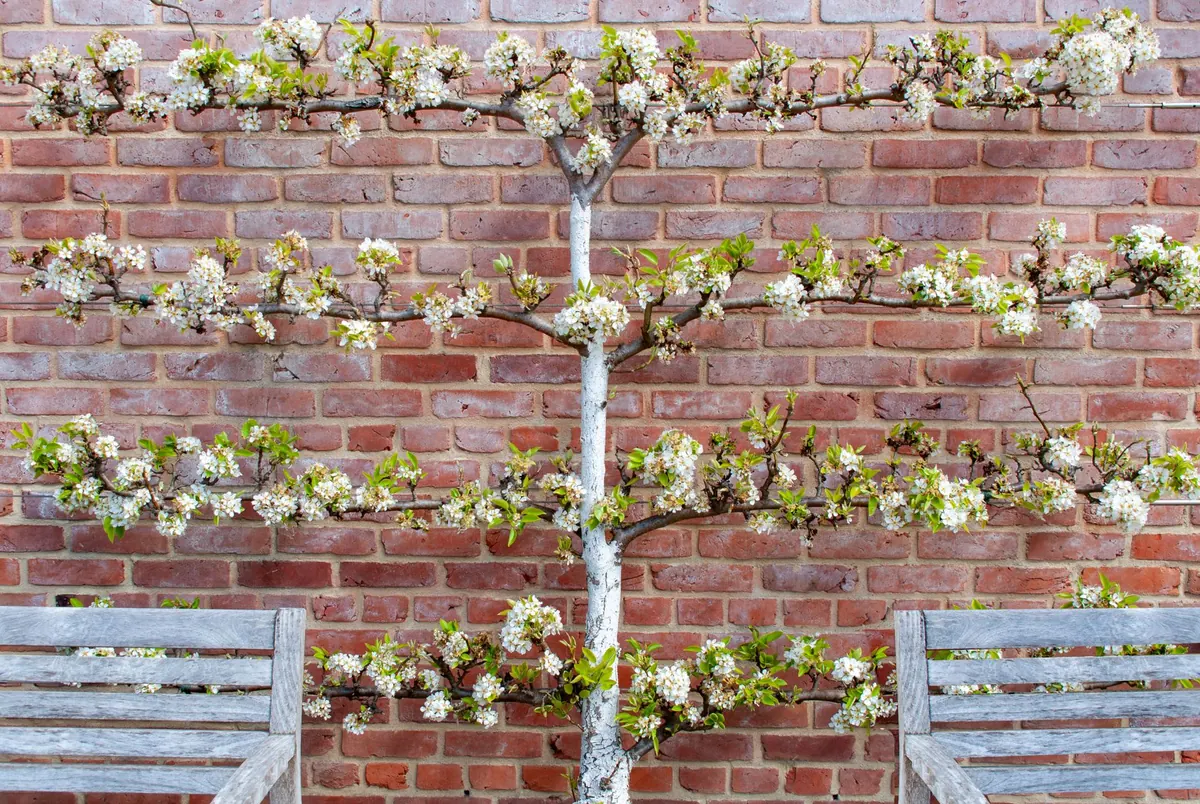
Spacing depends on the rootstock, not on the variety. A dwarf apple on a very dwarfing rootstock can go in as close as 2.5m from its neighbour; a vigorous cooking apple on a large rootstock may want 6–8m or more. Trained forms — cordons, fans, espaliers — are planted much closer, against a wall or a set of wires. Check what your supplier recommends for your particular rootstock and training method, then add a little. A tree that is too close is much harder to live with than one with room to spare: pruning becomes awkward, air moves poorly through the canopy, and disease finds it easier to settle in.
Position matters just as much as distance:
- Sun. Most fruit wants six hours or more of direct light in summer. Shade costs you both yield and flavour.
- Frost. Avoid low hollows where cold air pools, as a late spring frost can strip the blossom off in a single night.
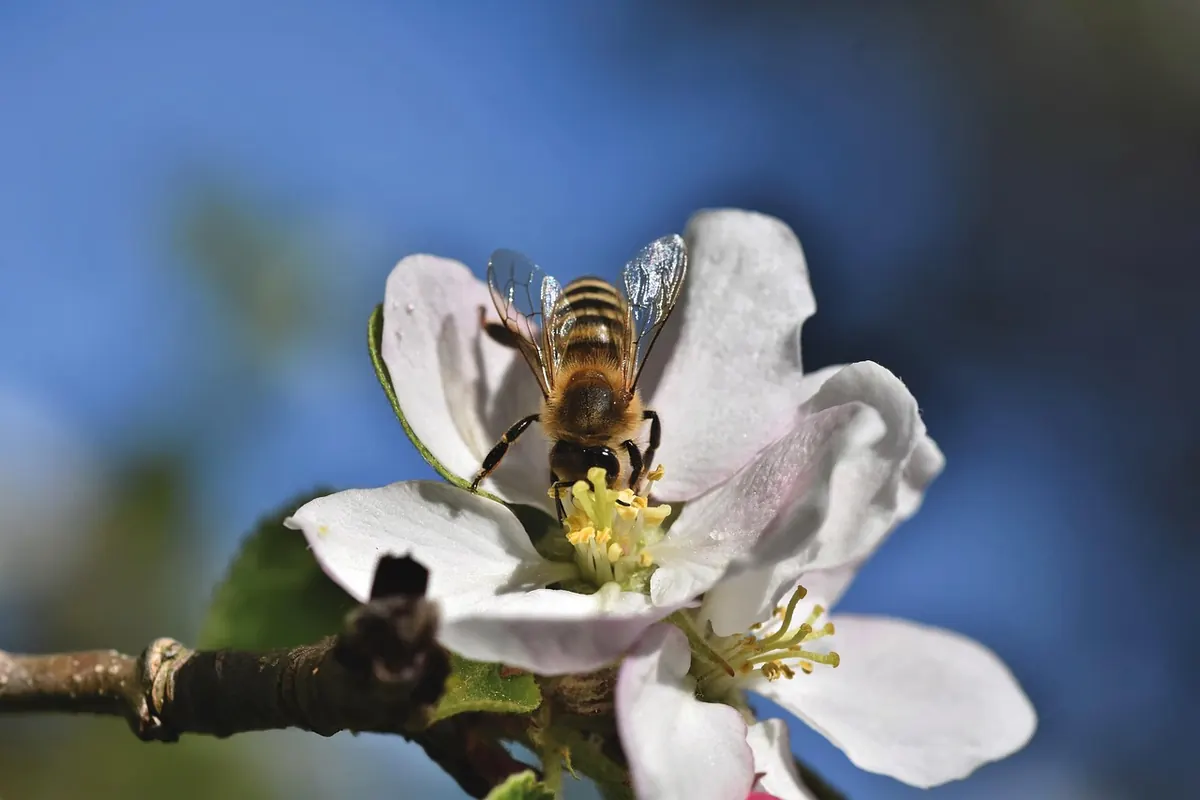
- Pollination. Check the tree's flowering group and make sure a compatible partner is nearby — a neighbour's tree or a crab apple may already do the job.
- Roots and services. Keep clear of drains, foundations and paving. Roots travel further than most people expect.
5. Skipping support and first-year aftercare
A bare-root tree on a dwarfing rootstock will need a stake for its first few years, and one on a very dwarfing rootstock may need one for life. Drive the stake in before planting, on the windward side, so you do not spear the roots. A short stake finishing around 60cm above ground, with the tree tied low, lets the trunk flex and thicken naturally. A tall stake with a proper tree tie gives more support on exposed sites.
Whichever you choose, check the tie each spring and again in late summer. A tie that fits comfortably in March can be cutting into the bark by August. Loosen it as the trunk swells, and remove the stake after three or four years once the tree stands on its own.
Add a guard if rabbits, deer or a strimmer are anywhere near. Mice and rabbits can ring-bark a young tree overnight, and that is usually fatal. Water thoroughly in the first two summers — a slow, deep soak once a week in dry spells is worth far more than a daily sprinkle. Finally, resist the urge to prune hard in year one. The tree needs its leaves to build roots.
Getting the first year right
Plant at the right depth, in ground that drains, with a clear mulched circle around the trunk and a stake you will remember to check. Water it properly through its first two summers, keep the weeds down and leave the secateurs alone.
That is the whole job. Do those few things and you will have a tree that settles quickly, grows away strongly in its second spring and starts paying you back with fruit years sooner than one that spent its first season struggling.
Photo: Alfo Medeiros / Pexels