The gap between a fruit that snaps cleanly from the branch and one that has turned soft and woolly can be a matter of days. Pick too early and apples lack sweetness, pears refuse to ripen properly, plums stay sharp. Pick too late and the crop collapses into wasp food and brown mush. Ripeness is not a secret, though. It is a set of small signals — colour, scent, feel, pip colour and the way the stem lets go — that you can learn to read in a few minutes on a sunny afternoon.
Begin with the tree, not the calendar
Variety and location matter more than the date. A Discovery apple in a sunny south-facing garden will be ready weeks before a Bramley in a cooler spot. Keep a notebook or a note on your phone: record when each tree flowers, when the first windfalls appear, and when you pick. After two or three seasons you will have a personal timetable far more useful than any generic chart.
Weather shifts things too. A warm, dry spell brings harvest forward; a cool, wet August holds it back. Windfalls are a useful clue, but they are not permission to strip the tree. Fruit that drops early is often damaged, crowded or simply the tree thinning itself. Check the fruit still on the branch before you fetch the basket.
The lift-and-twist test
This is the single most useful test for apples, pears and plums. Cup the fruit in your palm, lift it gently and twist. If the stem separates from the spur or branch with little resistance, leaving the fruit in your hand, it is ready. If it needs a firm tug, leave it for a few days. If it falls without any twist, it may be overripe — or simply loosened by a heavy crop.
Do not pull straight down. That damages the spur and can tear the skin. Use two hands for large apples and pears: one to steady the branch, one to lift and twist. Test several fruits from different parts of the tree, because the outside and the top ripen first. Plums need the same gentle approach; their skins bruise easily, and a plum that squashes in your hand is best eaten straight away.
Colour, skin and scent
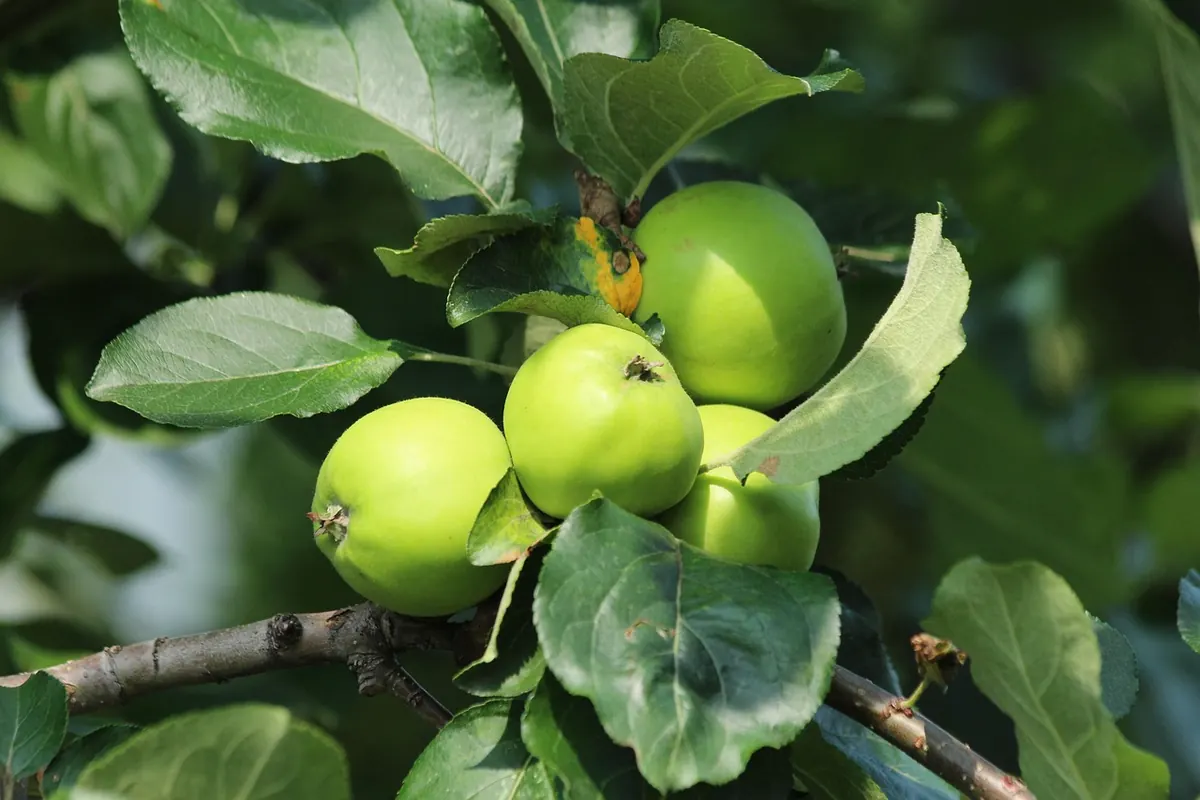
Blush is glamorous but unreliable. A red apple can colour up long before it is ripe. Look at the background colour instead — the skin around the stem and on the shaded side. For most apples it changes from a hard, grassy green to a paler, yellowish green. Green varieties such as Granny Smith stay green, but the skin becomes lighter and waxier. Pears shift from green to pale yellow, sometimes with a soft blush. Plums deepen to their full colour and develop a dusty bloom.
Skin feel is another clue. Ripe fruit often feels smooth and slightly waxy rather than tight and hard. Scent matters too. Cup an apple or pear near your nose and breathe in at the stem; a ripe fruit smells sweet and fresh. Plums develop a floral perfume. If you can smell fermentation, you have left it too long.
Pips, flesh and taste
When you are unsure, sacrifice one fruit. Cut it open. Apple pips should be dark brown or black, not pale cream or green. The flesh should be creamy white or yellow, not green-tinged. Pears also have dark pips when mature, though the flesh may still be firm. For plums, the flesh around the stone should be fully coloured and juicy rather than pale and dry.
Then taste. A ripe apple is sweet with a balancing acidity and a clear aroma. A pear should be juicy and fragrant, though you may be tasting it before it reaches peak softness. A plum should be sweet and rich, not mouth-puckering. If an apple tastes floury, it is past its best; if it tastes like nothing much, it probably needed another week. For cooking apples, sharpness is expected, but the fruit should still be mature enough to store and cook down well.
Why pears are picked under-ripe
Pears are the exception that catches many growers out. They ripen from the inside out. If you leave them on the tree until the outside is soft, the core will already be mushy or grainy. The trick is to pick them when they are mature but still firm, then ripen them indoors at room temperature. A pear is ready for picking when it has reached full size, the skin has begun to lighten, the pips are dark, and the stem separates with a gentle lift and twist. Press the neck, just below the stem; a slight give is a good sign.
Conference, Comice and Williams are all treated this way. Pick them before they soften, store them cool if you need to delay ripening, then bring them into the kitchen a few at a time. Check daily. A pear can go from firm to perfect to collapsing in what feels like a single afternoon.
A fruit-by-fruit checklist
- Apples: background colour pales, pips are dark, skin feels waxy, fruit lifts and twists away easily, taste is sweet and aromatic.
- Pears: full size but firm, skin lightens, pips dark, slight give at the neck, stem separates with a gentle twist. Ripen off the tree.
- Plums: full colour and bloom, slight softness at the blossom end, stem separates cleanly, sweet scent, juicy flesh around the stone. Eat, freeze or cook quickly.
Pick in stages and store with care
Harvest is not a single day. Most trees ripen over one to three weeks, so go round every few days and take only what is ready. Use a basket or a shallow box rather than a bag, and never drop fruit into it. Keep the stalks on apples and pears; they store better that way. Handle plums as if they were eggs.
Move fruit out of the sun as soon as you can. Apples and pears keep best in a cool, dark, humid place — a garage, shed or spare fridge — and they should not be stored beside onions, potatoes or anything strongly scented, as they take on flavours. Check stored fruit every week and remove any with bruises or mould. Plums are best eaten fresh, frozen or turned into jam; they will not keep for months like a good apple.
If you are still unsure, pick
Photo: zoosnow / Pixabay